
Extreme

What’s the most venomous animal in the world?

Potency might only be half the story. Here’s how five of the world’s most venomous animals actually stack up when it counts.

Rankings

The words “venomous” and “poisonous” are often used interchangeably, but they describe two completely different ways of being dangerous. Venomous animals actively inject their toxin into a victim — through a bite, a sting, or a spine — and need a delivery system to do it. Poisonous animals are dangerous passively: the toxin only takes effect if you touch or eat them. A scorpion is venomous. A poison dart frog is poisonous.

The standard way scientists compare venom potency is LD50 (lethal dose 50% — the amount that kills half of a test population, usually mice, scaled by body weight). It’s a precise, controlled number — but one measured in a lab, on a fixed dose, with no regard for how much venom an animal actually delivers in a real encounter.

So rather than rank purely by lab-based venom potency, we’ve researched five sourced facts on each of the 5 most venomous animals in the world. Every animal on this list earns its spot the venomous way — by injecting.
Jump to ranking

#5 

Fact #5
Delivers an extremely painful sting that can cause paralysis
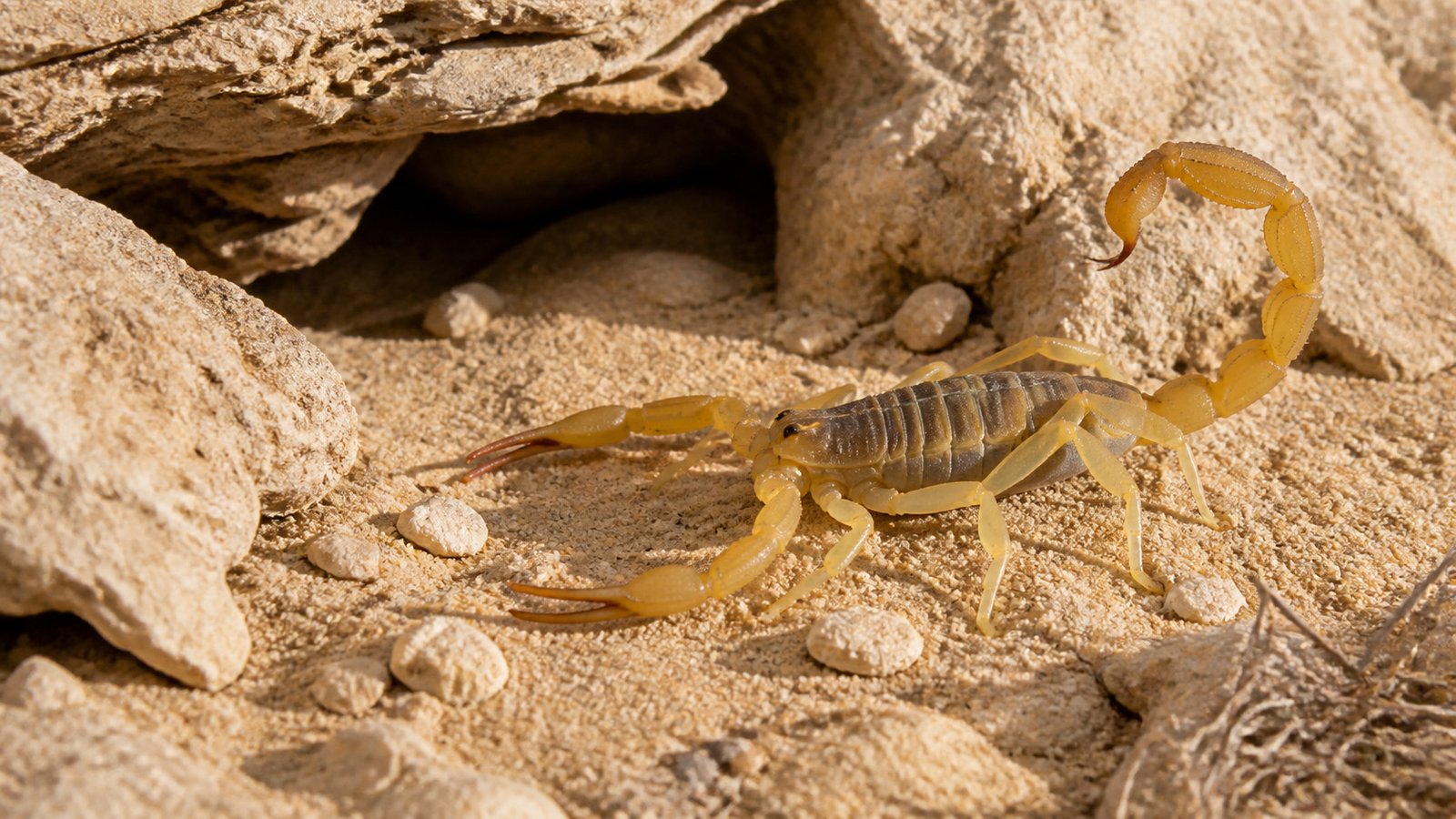
The sting from a Deathstalker Scorpion causes extreme pain and, in serious cases, paralysis. It’s especially dangerous for children, the elderly, and those with pre-existing conditions.
Fact #4
The fastest sting ever recorded from a scorpion
The sting strike of the Deathstalker Scorpion is the fastest ever recorded among scorpions studied by researchers, with its tail snapping at 130 cm per second (51 in/sec) — roughly 22 times its own body length every second. Scaled to a human, that’s like running about 135 km/h (84 mph), nearly 3 times faster than Usain Bolt’s top recorded sprint speed.
Fact #3
Its venom helps doctors see tumors during surgery
The venom from a Deathstalker Scorpion contains chlorotoxin, which binds selectively to cancer tumour cells while ignoring healthy tissue. This helps surgeons see the boundaries of brain tumours during surgery.
Fact #2
A gallon of its venom is worth about US$39 million
The Deathstalker Scorpion holds the Guinness World Record for “most venomous scorpion.” Its venom is also the most valuable liquid by volume on Earth (~US$39 million/gallon), and has medical properties that have been found effective in treating cancer, malaria, and bacteria such as tuberculosis.
Fact #1
A grain-of-rice-sized amount is enough to be lethal
The Deathstalker Scorpion’s venom carries an LD50 (lethal dose 50% – the amount that kills half of test subjects) of 0.25 mg/kg. Scaled to a 70 kg adult, a lethal dose would roughly be the weight of a grain of rice (~17.5 mg). Thankfully, a single sting from the scorpion usually delivers just 3.5% of that, which is why actual deaths in healthy adults tend to be rare.

#4 

Fact #5
You might not even feel it bite you
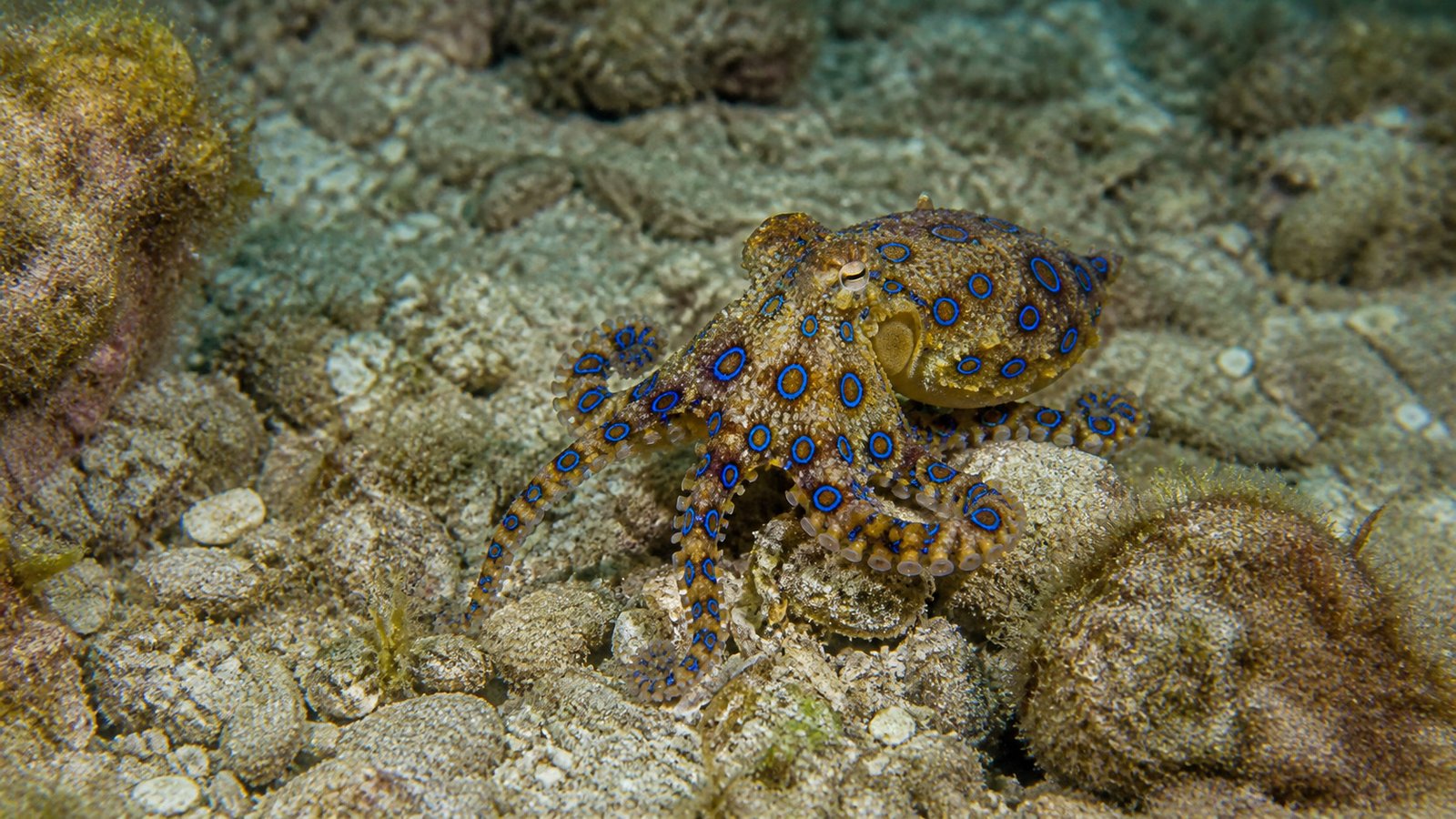
The Blue-Ringed Octopus delivers a near-painless bite that injects the neurotoxin tetrodotoxin (TTX), blocking nerve signals in the body and causing muscle paralysis. It can disable the diaphragm, leading to death by respiratory failure — and there is no known antivenom for the toxin.
Fact #4
Its blue rings are a warning, not decoration
The Blue-Ringed Octopus grows no larger than 22 cm and weighs up to 100 g — some adults are the size of a golf ball. Usually brown, tan, or creamish-yellow, which helps them blend into the seabed. Their blue rings only appear when they feel threatened, produced by special cells called chromatophores that stretch open to reveal the hidden pigment, warning predators to keep away.
Fact #3
It would rather just eat crabs and be left alone
Despite carrying one of the most potent venoms in the ocean, the Blue-Ringed Octopus mostly just wants to chill, eat crabs, and live a quiet, solitary life. Only 3 deaths have been attributed to it since the 1960s.
Fact #2
A grain of salt’s worth of venom can kill an adult
The Blue-Ringed Octopus holds the Guinness World Record for “most venomous cephalopod.” Its tetrodotoxin has a subcutaneous LD50 (lethal dose 50% – the amount that kills half of test subjects) of just 12.5 micrograms per kg of body weight — for a 70 kg adult, a dose of only 0.87 mg (about the weight of a single grain of table salt) could be lethal.
Fact #1
Enough venom in one octopus to kill 26 people
Tetrodotoxin (TTX), found in the saliva of the blue-ringed octopus, is 1,000 times more powerful than cyanide. A single octopus carries enough venom to kill 26 humans within minutes. Symptoms include nausea, vision loss, loss of senses and motor skills, muscle numbness, and paralysis.

#3 

Fact #5
The toxin is so complex that no effective antivenom exists
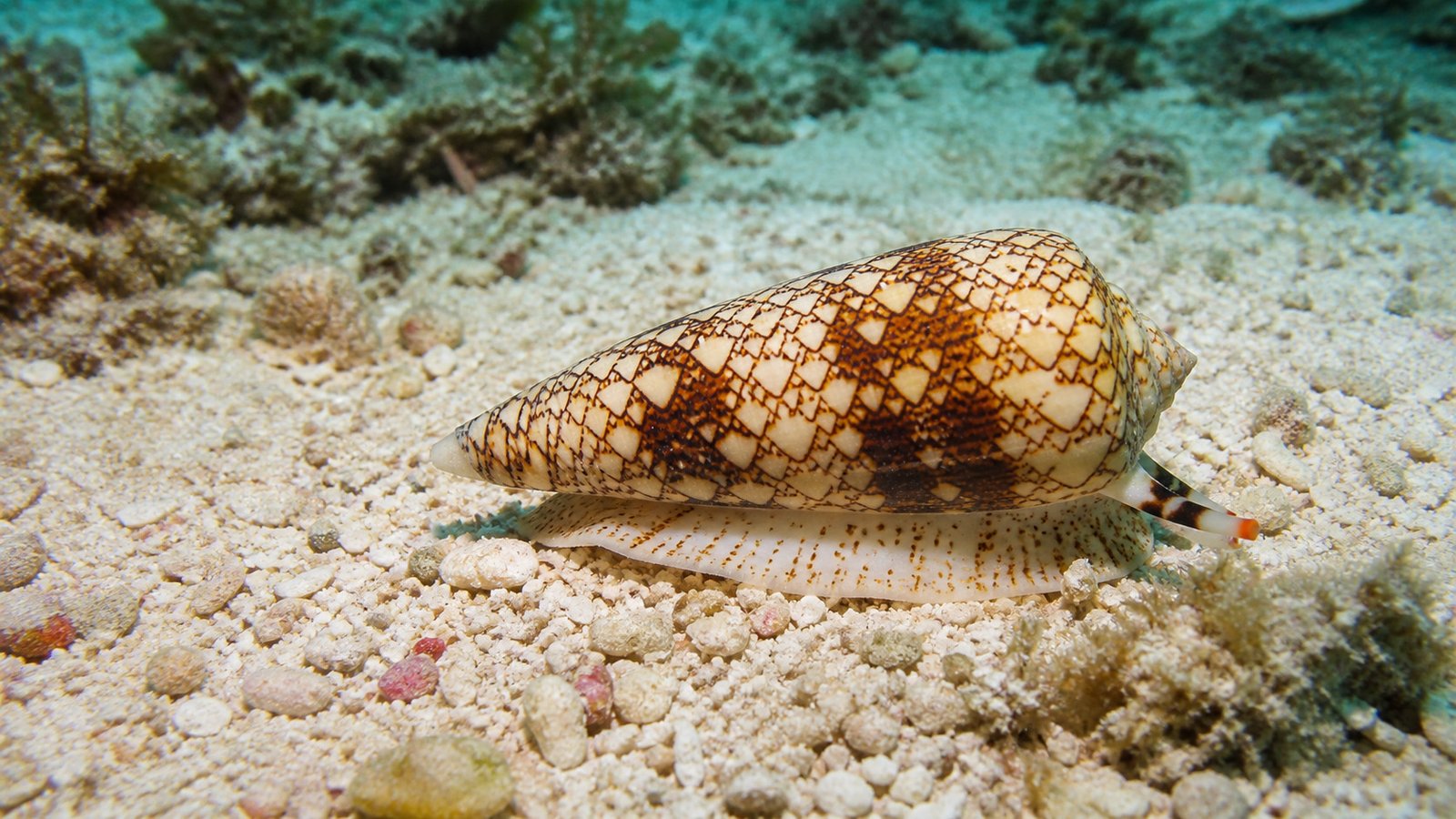
The Geography Cone Snail delivers venom through a complex mixture of neurotoxic compounds called conotoxins, which block nerve and muscle signals through multiple pathways at once. Symptoms progress from numbness and weakness to full-body paralysis, respiratory failure, and cardiovascular collapse. The venom is so chemically complex that no effective antivenom exists.
Fact #4
A dose equal to two grains of salt is enough to be lethal
The Geography Cone Snail holds the Guinness World Record for “most venomous gastropod.” Studies estimate the venom’s LD50 (lethal dose 50% – the amount that kills half of test subjects) at 0.012 to 0.030 mg/kg, meaning for a 70 kg adult, a lethal dose could be as little as 0.84 to 2.1 mg, roughly the weight of one to two grains of table salt.
Fact #3
Its shell is highly sought after by collectors
Growing to about 4 to 6 inches in length, the Geography Cone Snail has a beautifully patterned brown and white shell that’s highly sought after by shell collectors. Despite its venom’s potency, researchers have recorded only 36 deaths from the snail’s sting over the past 300 years.
Fact #2
A potential painkiller 10,000 times stronger than morphine, without the side effects
Certain proteins in the Geography Cone Snail’s venom target specific human pain receptors and have shown potential as painkillers. They can be up to 10,000 times more potent than morphine, but come without morphine’s addictive properties or side effects.
Fact #1
Enough toxin in one snail to kill up to 60 people
As one of the largest cone snail species, the Geography Cone Snail can produce about 50 mg of venom in its convoluted venom gland — enough, in theory, to kill up to 60 people.

#2 

Fact #5
Millions of microscopic harpoons fire on contact
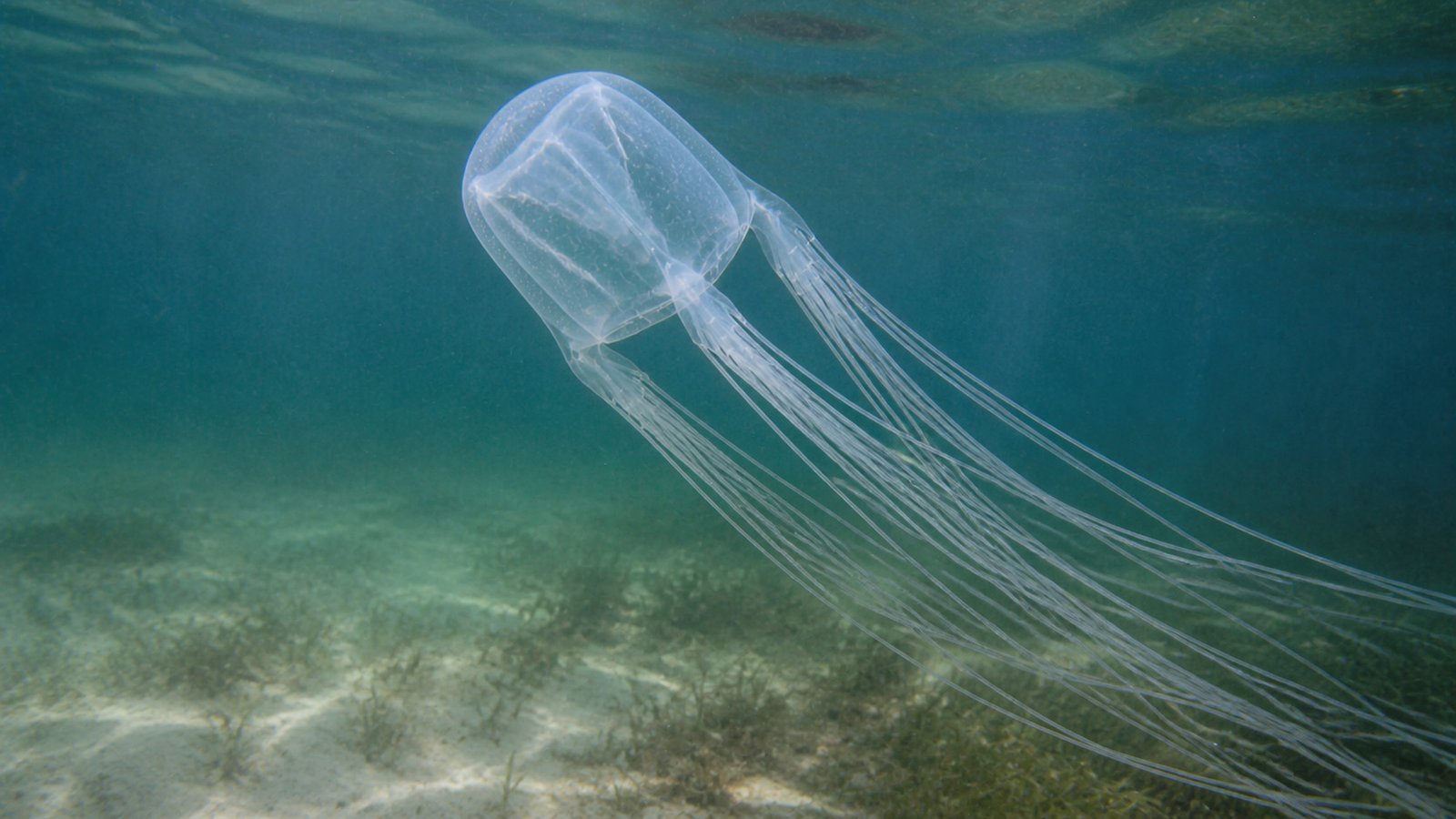
The Box Jellyfish delivers its sting through millions of microscopic stinging cells called nematocysts, each containing a coiled, harpoon-like thread attached to a venom reservoir. On contact, these cells fire their harpoons into the skin and inject venom, and with each tentacle covered in millions of these cells, a single sting can deliver a massive dose of venom over a wide area.
Fact #4
Pain from its sting can cause heart failure before the victim reaches shore
The Box Jellyfish’s venom contains toxins that simultaneously attack the heart, nervous system, and skin cells. The pain from a sting can be so overwhelming that victims have gone into shock and drowned, or suffered heart failure, before even reaching shore. Survivors reported experiencing considerable pain for weeks after, often left with scars on the sting areas.
Fact #3
Kills up to 100 people a year, likely more
Estimates of annual fatalities range from 40 to more than 100 worldwide. However, this might be an underestimate, as some countries lack official reporting systems for deaths caused by box jellyfish stings. That makes it one of the deadliest venomous animals in the world, made worse by the fact that there’s no clear consensus on how the venom affects humans or how to effectively treat envenomation.
Fact #2
It actively hunts prey and has 24 eyes to spot it
Unlike most jellyfish, which drift passively with the current, the Box Jellyfish is a strong, active swimmer that uses jet propulsion to chase down its prey. It’s also one of the few jellyfish with eyes, 24 in total, giving it a surprisingly complete view of its surroundings as it hunts.
Fact #1
One jellyfish carries enough venom to kill up to 120 people
The Box Jellyfish holds the Guinness World Record for “most venomous jellyfish.” With up to 60 tentacles, it’s theorised that a single jellyfish carries enough venom to kill up to 120 people. Immediate first aid involves using vinegar to wash off any tentacles stuck to the body.

#1 

Fact #5
Strikes repeatedly and holds on until its prey dies
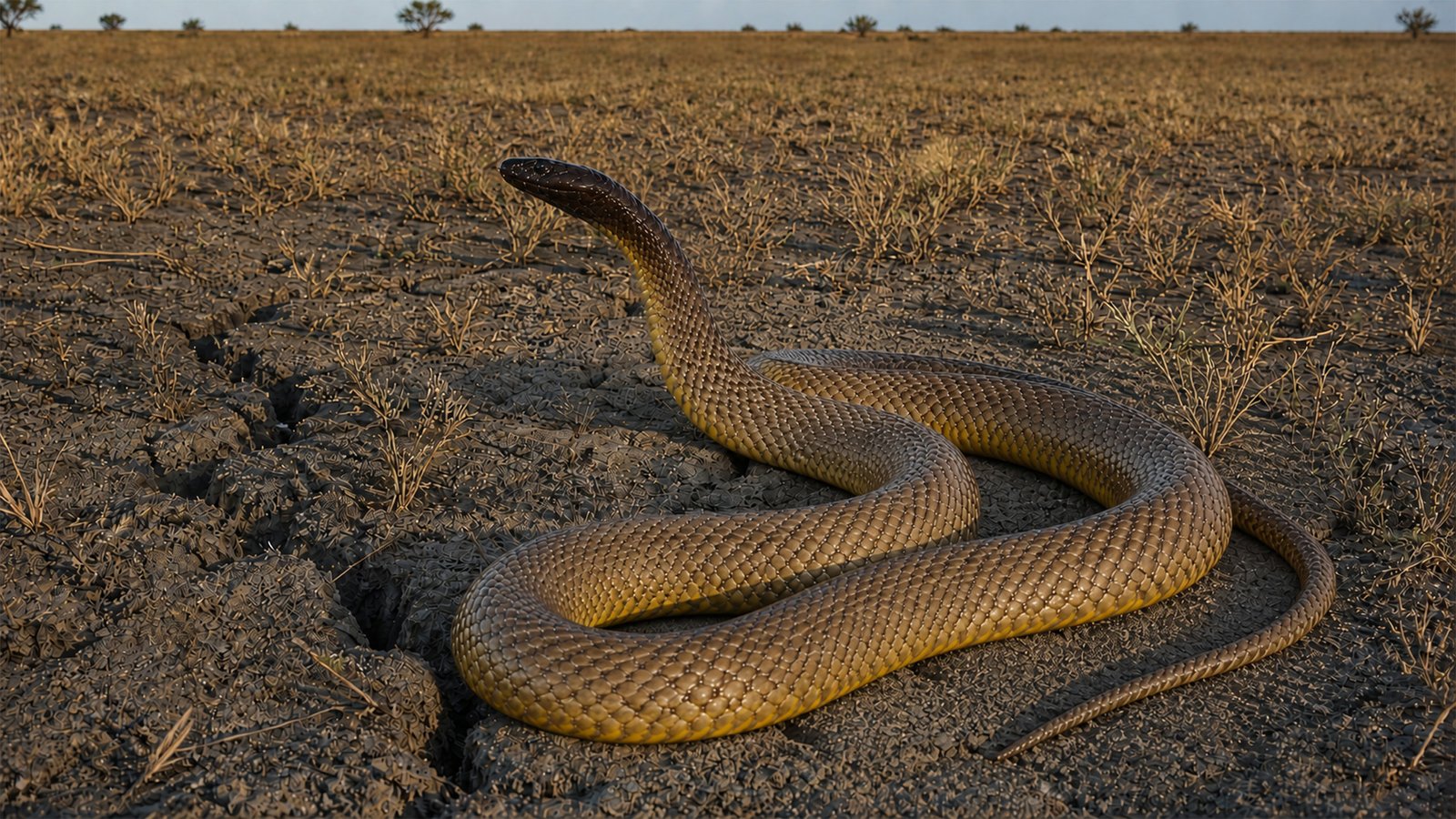
Unlike other snakes, which tend to release their prey to avoid injury, the Inland Taipan usually strikes several times in quick succession and holds on as its fast-acting venom kills its prey. The snake is most active in the early hours of the morning, then shelters for the rest of the day in deep soil cracks and animal burrows.
Fact #4
Its venom attacks multiple vital parts of the body at once
The Inland Taipan’s bite delivers a complex cocktail of toxins called taipoxin. This mix of neurotoxins, procoagulants, and myotoxins works on multiple fronts at once, paralyzing muscles, inhibiting breathing, causing internal hemorrhaging, and damaging muscle tissue directly.
Fact #3
Despite being the most venomous, it would rather avoid you
Despite holding the title of the world’s most venomous snake, the Inland Taipan is shy and reclusive, and prefers to avoid human contact whenever possible. It’s also surprisingly fragile, easily injured or killed by predators like birds of prey or feral cats, and human persecution born from fear remains one of the biggest threats to the species.
Fact #2
Fortunately, no human deaths have ever been recorded from its bite
The Inland Taipan is found only in the far south-west corner of Queensland and the far north-east of South Australia, so it’s rarely encountered by people. Thanks to this, there have been no recorded human deaths caused by the snake.
Fact #1
One bite can kill a quarter million mice
The Inland Taipan holds the Guinness World Record for “most venomous land snake.” Its estimated human lethal dose is just 1 mg, yet a single bite can deliver over 100 mg of venom, meaning one bite carries around 100 times more venom than needed to kill a person. One recorded specimen yielded 110 mg in a single milking, enough to kill 250,000 mice or roughly 125 adult men.

Conclusion

While the animals on this list are the most venomous in the world, none of them are out to harm humans. They’re rarely aggressive toward people, using their venom for survival — mainly to kill prey. They also play an important role in their ecosystems, and several have even proven valuable in medical research. That said, their venom potency is extremely high and can easily be lethal. Your best bet is to leave them alone and let them go about their lives.

Get the Extremes

THE WORLD’S WILDEST FACTS. VERIFIED.

New rankings, remarkable animals and sourced facts, delivered occasionally.

No spam. Just verified extremes.

Follow What's The Most

Watch the countdowns. Read the evidence.

YouTube

TikTok

Instagram

Facebook

The World, Ranked.

Extreme claims.

Grounded in facts.

We start with a deceptively simple question and ends with a trail of credible sources