The Breakdown
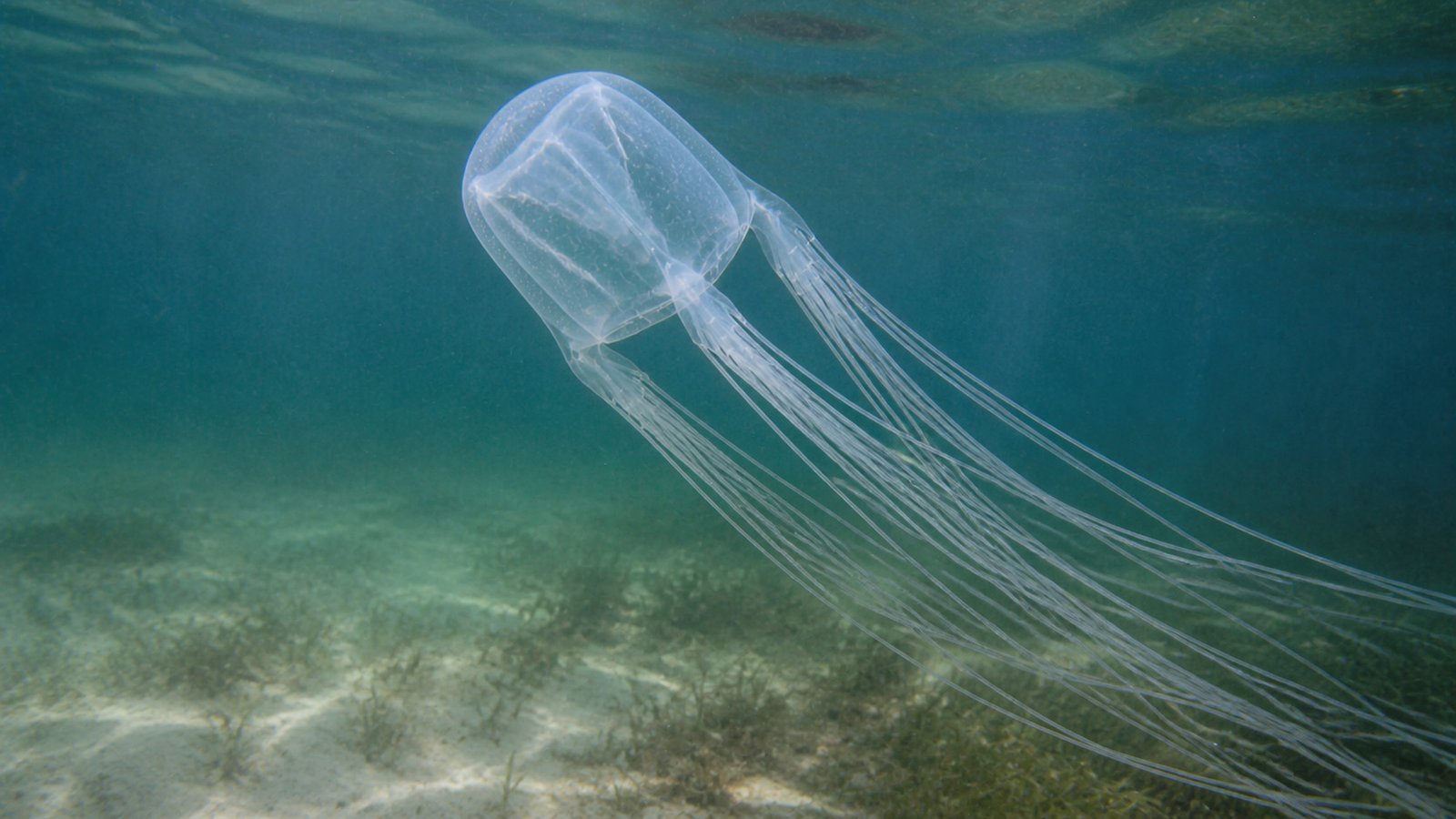
The deadliest and largest species is the Australian box jellyfish (Chironex fleckeri), which is found along Australia’s northern coast. It has a box-shaped bell, measuring about 30 cm, and its tentacles can grow up to 4 m, making it longer than a horse.
Millions of microscopic harpoons fire on contact
The Box Jellyfish delivers its sting through millions of microscopic stinging cells called nematocysts, each containing a coiled, harpoon-like thread attached to a venom reservoir. On contact, these cells fire their harpoons into the skin and inject venom, and with each tentacle covered in millions of these cells, a single sting can deliver a massive dose of venom over a wide area.
Pain from its sting can cause heart failure before the victim reaches shore
The Box Jellyfish’s venom contains toxins that simultaneously attack the heart, nervous system, and skin cells. The pain from a sting can be so overwhelming that victims have gone into shock and drowned, or suffered heart failure, before even reaching shore. Survivors reported experiencing considerable pain for weeks after, often left with scars on the sting areas.
Kills up to 100 people a year, likely more
Estimates of annual fatalities range from 40 to more than 100 worldwide. However, this might be an underestimate, as some countries lack official reporting systems for deaths caused by box jellyfish stings. That makes it one of the deadliest venomous animals in the world, made worse by the fact that there’s no clear consensus on how the venom affects humans or how to effectively treat envenomation.
It actively hunts prey and has 24 eyes to spot it
Unlike most jellyfish, which drift passively with the current, the Box Jellyfish is a strong, active swimmer that uses jet propulsion to chase down its prey. It’s also one of the few jellyfish with eyes, 24 in total, giving it a surprisingly complete view of its surroundings as it hunts.
One jellyfish carries enough venom to kill up to 120 people
The Box Jellyfish holds the Guinness World Record for “most venomous jellyfish.” With up to 60 tentacles, it’s theorised that a single jellyfish carries enough venom to kill up to 120 people. Immediate first aid involves using vinegar to wash off any tentacles stuck to the body.
Profile
COMMON NAME: Box Jellyfish
SCIENTIFIC NAME: Chironex fleckeri
HABITAT: Shallow, coastal seas. Usually found in waters shallower than 5 m, though it has been recorded as deep as 50 m
COUNTRIES: Australia (northern coast)
SIZE: Bell about 30 cm; tentacles up to 4 m
WEIGHT: Up to 6 kg
DIET: Small fish, shrimp, and other crustaceans
LIFESPAN: 9 months to 1 year