The Breakdown
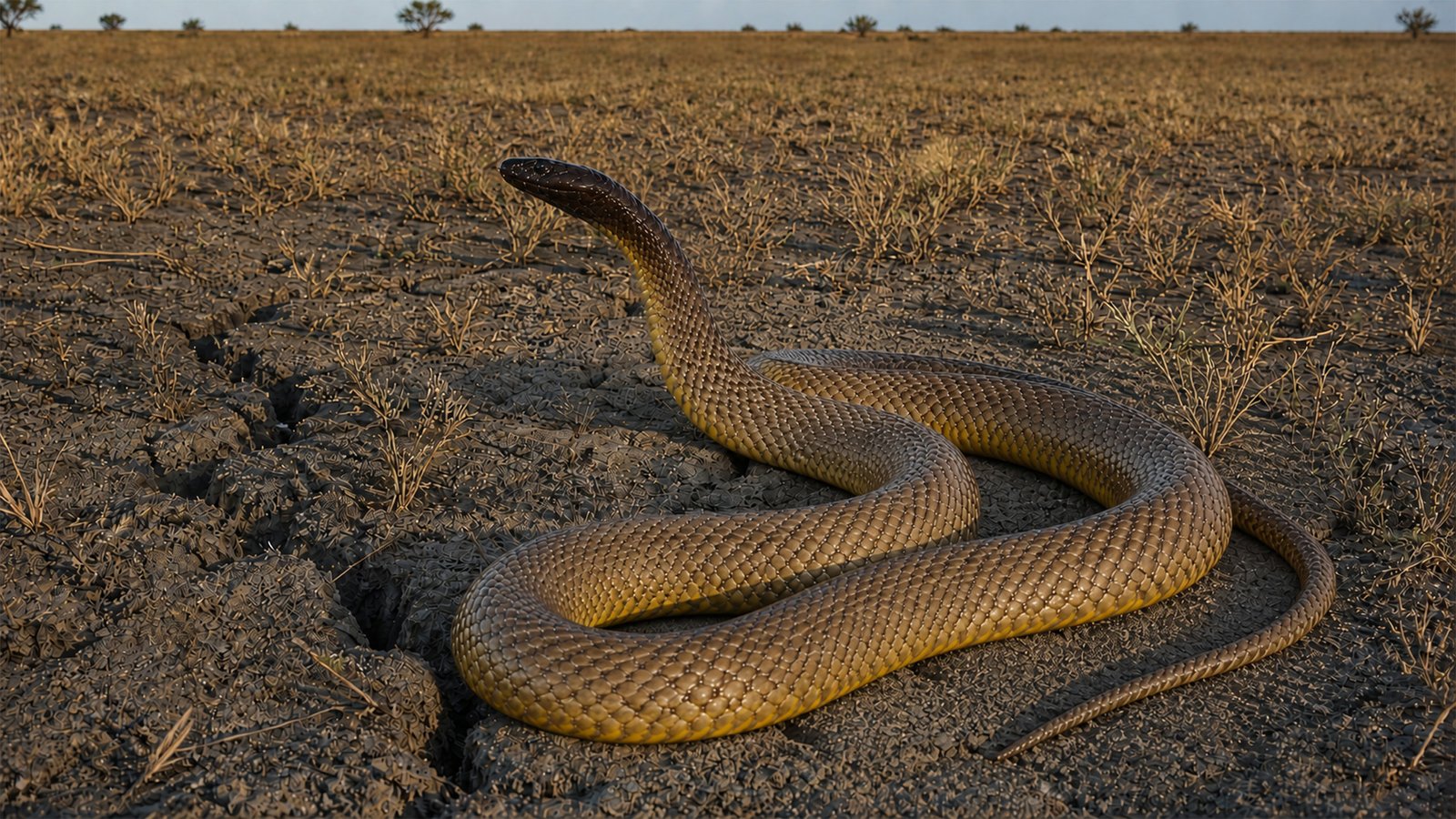
Commonly nicknamed the “fierce snake” because of the potency of its venom. Interestingly, the name doesn’t fit its personality, as it’s known for being shy and tending to avoid humans whenever possible.
Strikes repeatedly and holds on until its prey dies
Unlike other snakes, which tend to release their prey to avoid injury, the Inland Taipan usually strikes several times in quick succession and holds on as its fast-acting venom kills its prey. The snake is most active in the early hours of the morning, then shelters for the rest of the day in deep soil cracks and animal burrows.
Its venom attacks multiple vital parts of the body at once
The Inland Taipan’s bite delivers a complex cocktail of toxins called taipoxin. This mix of neurotoxins, procoagulants, and myotoxins works on multiple fronts at once, paralyzing muscles, inhibiting breathing, causing internal hemorrhaging, and damaging muscle tissue directly.
Despite being the most venomous, it would rather avoid you
Despite holding the title of the world’s most venomous snake, the Inland Taipan is shy and reclusive, and prefers to avoid human contact whenever possible. It’s also surprisingly fragile, easily injured or killed by predators like birds of prey or feral cats, and human persecution born from fear remains one of the biggest threats to the species.
Fortunately, no human deaths have ever been recorded from its bite
The Inland Taipan is found only in the far south-west corner of Queensland and the far north-east of South Australia, so it’s rarely encountered by people. Thanks to this, there have been no recorded human deaths caused by the snake.
One bite can kill a quarter million mice
The Inland Taipan holds the Guinness World Record for “most venomous land snake.” Its estimated human lethal dose is just 1 mg, yet a single bite can deliver over 100 mg of venom, meaning one bite carries around 100 times more venom than needed to kill a person. One recorded specimen yielded 110 mg in a single milking, enough to kill 250,000 mice or roughly 125 adult men.
Profile
COMMON NAME: Inland Taipan
SCIENTIFIC NAME: Oxyuranus microlepidotus
HABITAT: Usually found in the cracking clays and loamy soils of the outback floodplains, though it also ventures onto nearby gibber plains, dunes, and rocky outcrops when cover is available
COUNTRIES: Australia — restricted to the far south-west corner of Queensland and the far north-east of South Australia
SIZE: 1.8 to 2.5 m
WEIGHT: 1 to 2 kg
DIET: Small to medium-sized mammals, particularly native rats and mice
LIFESPAN: 10 to 15 years (based on captive data; wild lifespan assumed similar)