
Extreme

What’s the most poisonous animal in the world?

A touch might be all it takes to get poisoned. Here’s how five of the world’s most poisonous animals actually stack up when it counts.

Rankings

Poisonous animals are dangerous passively. Their toxin usually only takes effect if you touch or eat them. Venomous animals, on the other hand, actively inject their toxin into a victim through a bite or a sting. A poison dart frog is poisonous. A snake is venomous.

But being classed as poisonous doesn’t automatically mean an animal is fatally dangerous to a person. We’ve built this list around how much danger each animal actually poses, and to whom, not purely on lab measurements of their toxin.

So rather than rank by lab-based potency, we’ve researched five sourced facts on each of the 5 most poisonous animals in the world, then ranked them by real-world danger. Three of the five — the Pufferfish, Rough-Skinned Newt, and Golden Poison Frog — carry a documented toxin load capable of killing multiple adult humans. The other two make the list for different reasons: the Cane Toad is one of the world’s most destructive invasive species, with a toxin potent enough to kill a pet within minutes, while the Hooded Pitohui is one of the only birds known to be poisonous at all — though its toxin sits at levels too low to seriously threaten a person. Where a direct human-lethality figure doesn’t exist, we’ve ranked by each animal’s most significant real-world impact instead.
Jump to ranking

#5 

Fact #5
One scratch and a numb mouth revealed it carries batrachotoxin
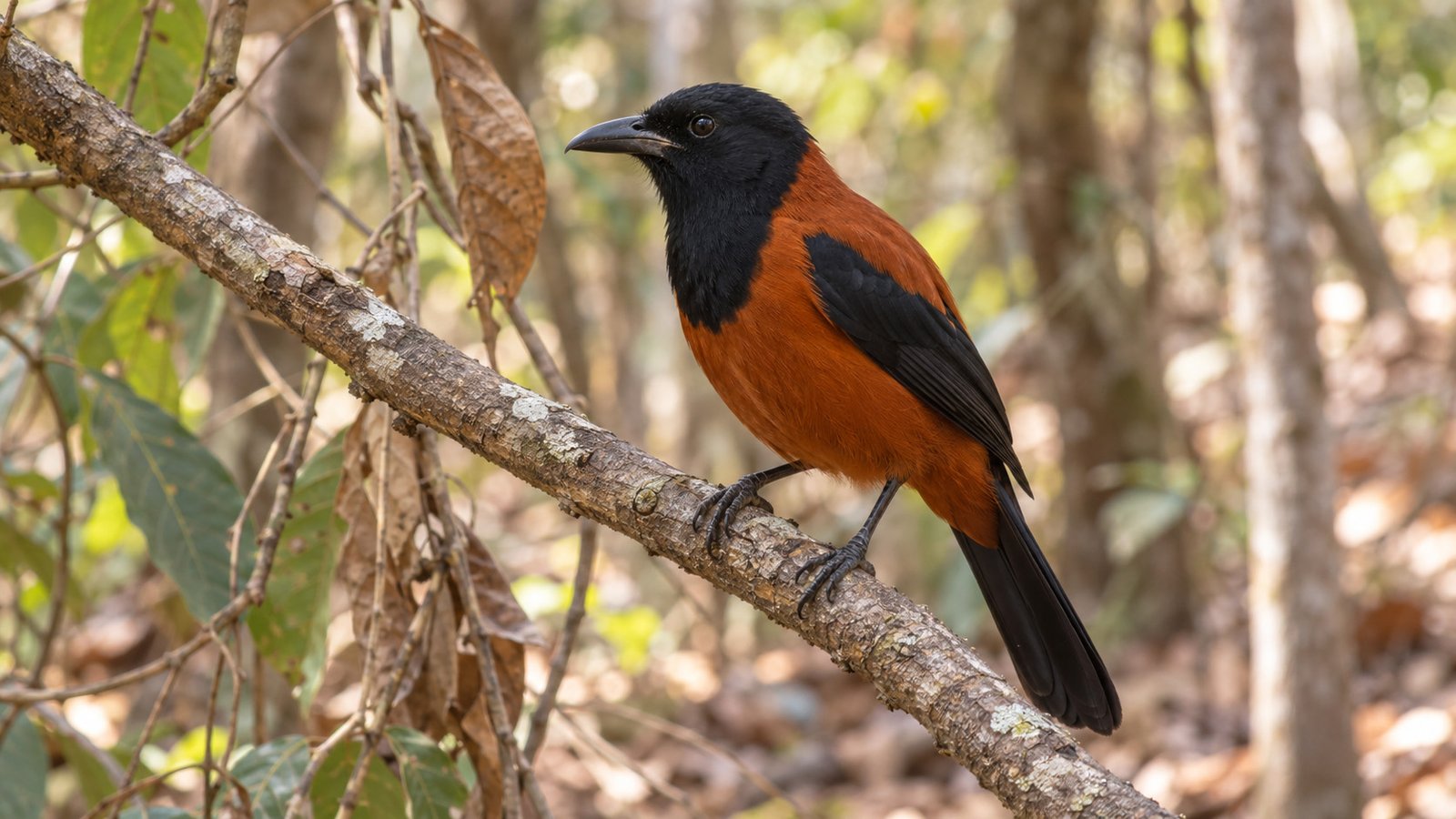
Hooded Pitohuis were first discovered to carry batrachotoxin by ornithologist Jack Dumbacher. After pricking his finger on one of the bird’s feathers, he reflexively put his finger in his mouth to ease the pain. His mouth began to go numb and burn. Suspecting the bird was poisonous, he carried out extensive research and concluded that it carries the toxin in its feathers, skin, and internal organs.
Fact #4
Its own genus name literally means "rubbish bird" in Papuan
Poisonous birds are rare, but the Hooded Pitohui has been known to be toxic by the local people of New Guinea for centuries. Its genus name, Pitohui, is a Papuan term for “rubbish bird” or “garbage bird,” a reference to its foul smell and inedibility. Scientists have recorded it as the only bird that the natives would not eat.
Fact #3
Beetles in its diet are the suspected source of its poison
Like many poisonous animals, the Hooded Pitohui doesn’t appear to produce batrachotoxin itself. Choresine beetles have been found in its diet, and are suspected to be the source of its poison. Scientists believe the toxin protects the birds from natural enemies, including parasites, predators, and humans.
Fact #2
A still-undiscovered "toxin sponge" might be what keeps it from poisoning itself
Scientists theorise that the Hooded Pitohui might carry an as-yet-undiscovered “toxin sponge” protein that absorbs batrachotoxin before it can affect the bird, similar in concept to a protein already found in bullfrogs that shields them from a different toxin. Discoveries like these matter because toxin research has historically led to medical breakthroughs, including anti-cancer compounds derived from bullfrog poison and new anaesthetics developed from tetrodotoxin.
Fact #1
Its skin carries enough toxin to kill several hundred mice
A Hooded Pitohui carries up to 20 micrograms of homobatrachotoxin in its skin alone, plus a further 2 to 3 micrograms in its feathers. In lab tests, just 0.05 micrograms of the toxin was enough to kill a mouse within 18 to 19 minutes — meaning the toxin stored in one bird’s skin could be lethal to several hundred mice.

#4 

Fact #5
Introduced to save Australia's sugar crops from pests, it became a bigger one
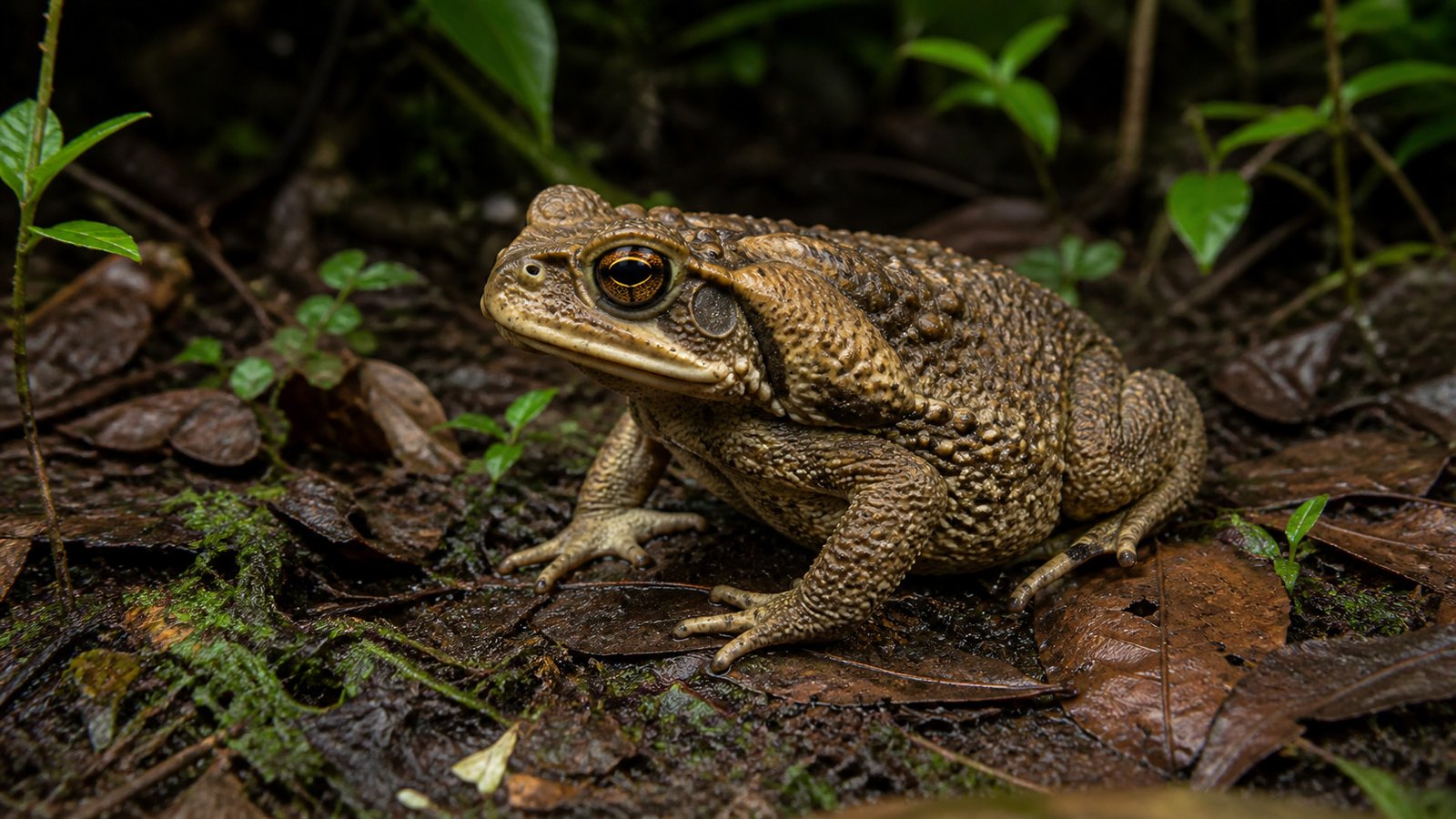
In 1935, Cane Toads were released in Queensland, Australia, to control native cane beetles that were damaging sugarcane crops. Instead of controlling the beetles, the toads became a pest that killed many native predators, and being indiscriminate eaters, out-competed native species for food. Since then, they have spread into other parts of Australia, threatening even more native species.
Fact #4
The world's largest toad also produces more eggs than any other amphibian
The Cane Toad holds the Guinness World Record for “largest toad.” Typically weighing 500 to 800 g and measuring 15 to 25 cm long, the largest ever recorded was one named Prinsen (“The Prince”), which weighed 2.65 kg and measured 38 cm. It is also the most fecund amphibian, laying up to 35,000 eggs at once, and capable of doing so twice a year.
Fact #3
Even its eggs and tadpoles carry the same toxin
Besides being poisonous during their adult stage, Cane Toads’ eggs and tadpoles are poisonous too, carrying the same toxin, bufotoxin. It contains cardioactive steroids that affect the heart and central nervous system. For humans, the toxin may be absorbed through the eyes, nose, or mouth, causing irritation.
Fact #2
Its introduction has driven sharp declines in native Australian predators
If ingested, the toxin from Cane Toads causes rapid heartbeat, excessive salivation, convulsions, and paralysis, and can be fatal to many native animals. Since their introduction, they have spread across Australia, causing an accelerated decline in populations of native predators like goannas, northern quolls, and snakes — largely a result of these animals attempting to eat the toxic toads.
Fact #1
Enough toxin to kill an average-sized dog in just 15 minutes
Vets at Animal Emergency Service treat thousands of cases of dogs being poisoned by Cane Toads every year. It happens when dogs lick or bite the toads, and the poison targets their heart, gastrointestinal tract, and nervous system. It is believed that an adult Cane Toad has enough toxin to kill an average-sized dog in 15 minutes. Rapid treatment is critical for survival.

#3 

Fact #5
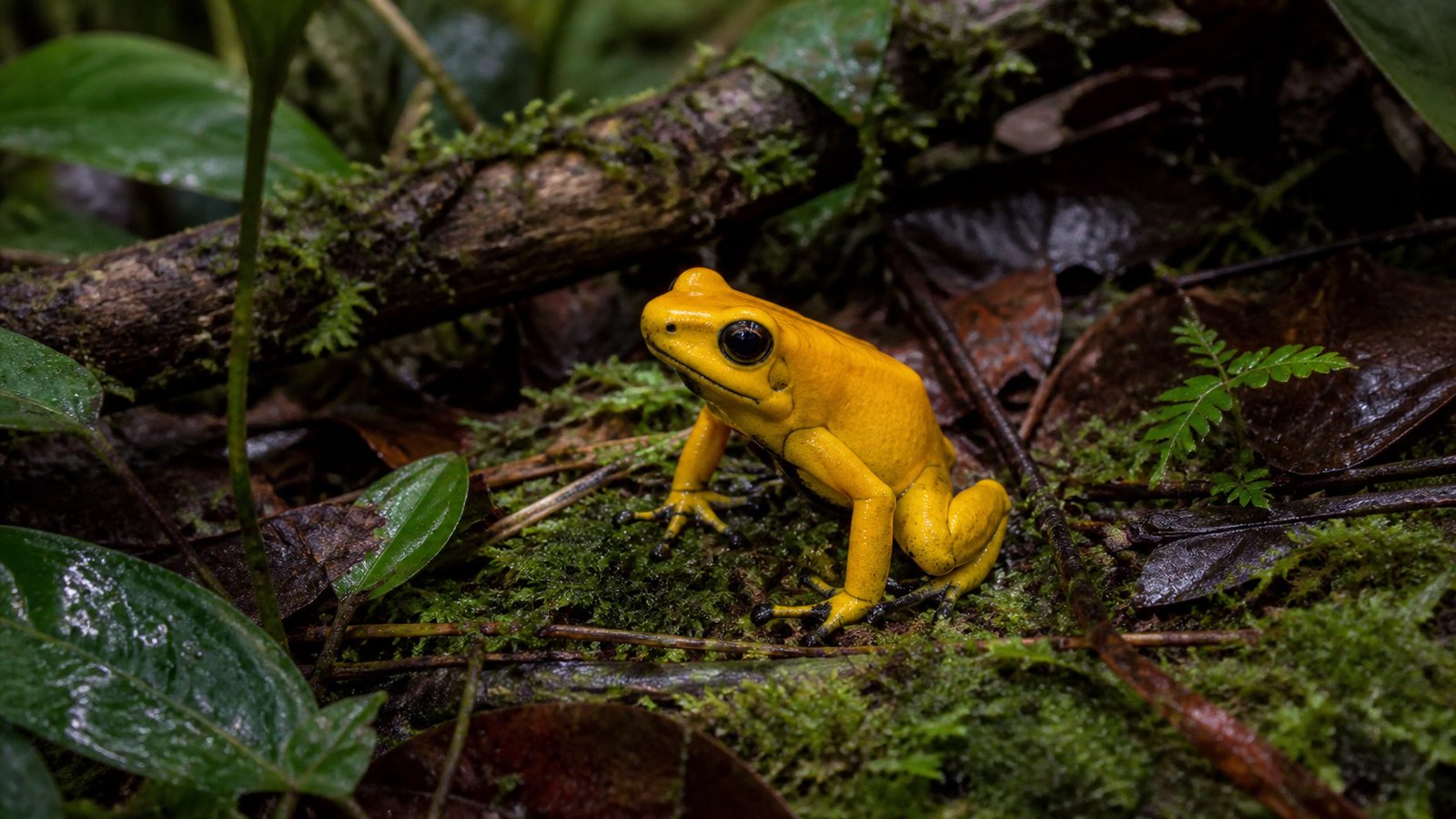
The largest poison dart frog in the world, and currently an endangered species
Golden Poison Frogs are the largest of the more than 100 poison dart frog species, though they still barely reach the size of a human thumb. They’re found in just a small patch of rainforest on Colombia’s Pacific coast — and nowhere else on Earth. Widespread deforestation in the region threatens their survival, and has landed them on the international endangered species list.
Fact #4
Highly toxic poison is likely derived from its diet
Golden Poison Frogs are a species of poison dart frog. They’re so called because some South American tribes use their skin secretions to coat the tips of hunting darts. It’s unclear exactly how they produce this toxic secretion, though it’s thought to be derived from their consumption of beetles, their primary prey in the wild. The same species raised in captivity on a beetle-free diet does not develop the same highly toxic alkaloid secretions.
Fact #3
It can be fatal within minutes once its poison enters your bloodstream
Batrachotoxin from the Golden Poison Frog works by locking nerve and muscle cells in a constant “on” state, so they can’t reset to send the next signal. In humans this causes progressive muscle paralysis, seizures, and respiratory arrest, and can be fatal within minutes to hours once it enters the bloodstream, either through a cut or the mucous membranes. There is no known antidote, and treatment is limited to supportive care, such as mechanical ventilation.
Fact #2
The poison, batrachotoxin, can work as a powerful painkiller with no side effects
Scientists have found that batrachotoxin from the Golden Poison Frog has an analgesic effect — it relieves pain without causing a loss of consciousness. To confirm this, researchers applied a non-lethal amount to volunteers’ skin, causing a tingling sensation followed by numbness that lasted over 30 minutes, with no side effects. Its action on a specific pain-signalling channel makes it a candidate for future topical pain treatments.
Fact #1
A single frog carries enough toxin to kill around 10 adult humans
The Golden Poison Frog holds the Guinness World Record for “most poisonous frog,” with an LD50 (lethal dose 50% — the amount that kills half of test subjects) of just 0.2 micrograms per kg of body weight. For a 70 kg adult, a dose of only 0.014 mg, which is lighter than a single grain of table salt, could be lethal. Despite its size, one frog carries enough toxin to kill around 10 adult humans.

#2 

Fact #5
An unsolved mystery involving a coffee pot led scientists to study its deadly poison
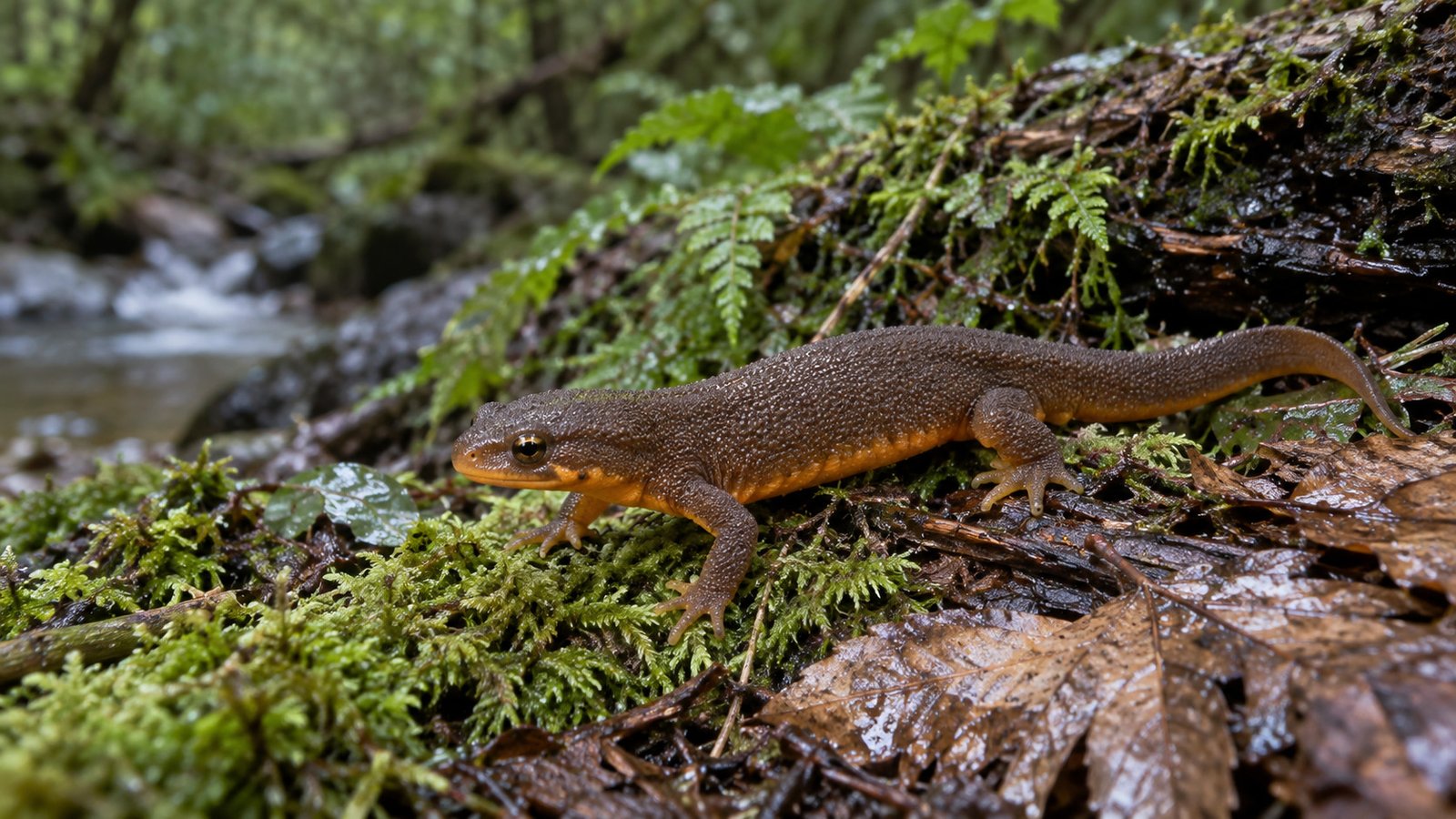
The formal research into the Rough-Skinned Newt’s poison began in the 1960s, after biologist Edmund “Butch” Brodie Jr. was intrigued by the tale of three hunters found dead around a campfire. The mystery was that they had no signs of injury and nothing had been stolen. The only clue was a newt found curled up inside their coffee pot — suggesting it might have poisoned them.
Fact #4
Locked in an evolutionary arms race to keep making its poison stronger
Common garter snakes are the newt’s main predator, and the two species are locked in a coevolutionary arms race. As the snakes build greater resistance to the toxin, the newts are driven to produce even more potent toxin, enough in some populations to kill thousands of mice, which in turn pushes the snakes toward even greater resistance, with each side escalating in response to the other over generations.
Fact #3
Bacteria living on its skin help make its deadly poison
Research has found that the Rough-Skinned Newt doesn’t produce its tetrodotoxin (TTX) itself — it’s produced by bacteria living on its skin. The same kind of toxin-producing partnership with bacteria is also seen in pufferfish and blue-ringed octopuses. Like its predator, the garter snake, the newt has evolved to become resistant to the effects of TTX.
Fact #2
Its toxin causes numbness, full-body paralysis, and respiratory failure
If ingested, the Rough-Skinned Newt’s tetrodotoxin (TTX) blocks the nerve signals muscles need to function, starting with numbness around the mouth and progressing to slurred speech and muscle weakness. In severe cases, it can cause full-body paralysis and respiratory failure. There is no known antidote, and treatment is limited to supportive care, such as helping the patient breathe, until the toxin clears the body.
Fact #1
A single newt carries enough toxin to kill 19 adults
The Rough-Skinned Newt belongs to a group known as the Pacific newts, which are recognised by Guinness World Records as the world’s most poisonous newts. The Rough-Skinned Newt itself can carry up to 14 mg of tetrodotoxin (TTX), and its LD50 (lethal dose 50% — the amount that kills half of test subjects) in humans is just 10.2 micrograms per kilogram of body weight. That means a single newt carries enough toxin to kill around 19 average-sized adults.

#1 

Fact #5
Pufferfish are surprisingly closely related to giant ocean sunfish
Pufferfish belong to the order Tetraodontiformes, a group of 447 species across ten families that also includes the bumphead ocean sunfish, the largest bony fish in the world at up to 2,721 kg (6000 lbs). Despite the shared ancestry, Pufferfish are tiny by comparison, and their own family, Tetraodontidae, contains around 196 species.
Fact #4
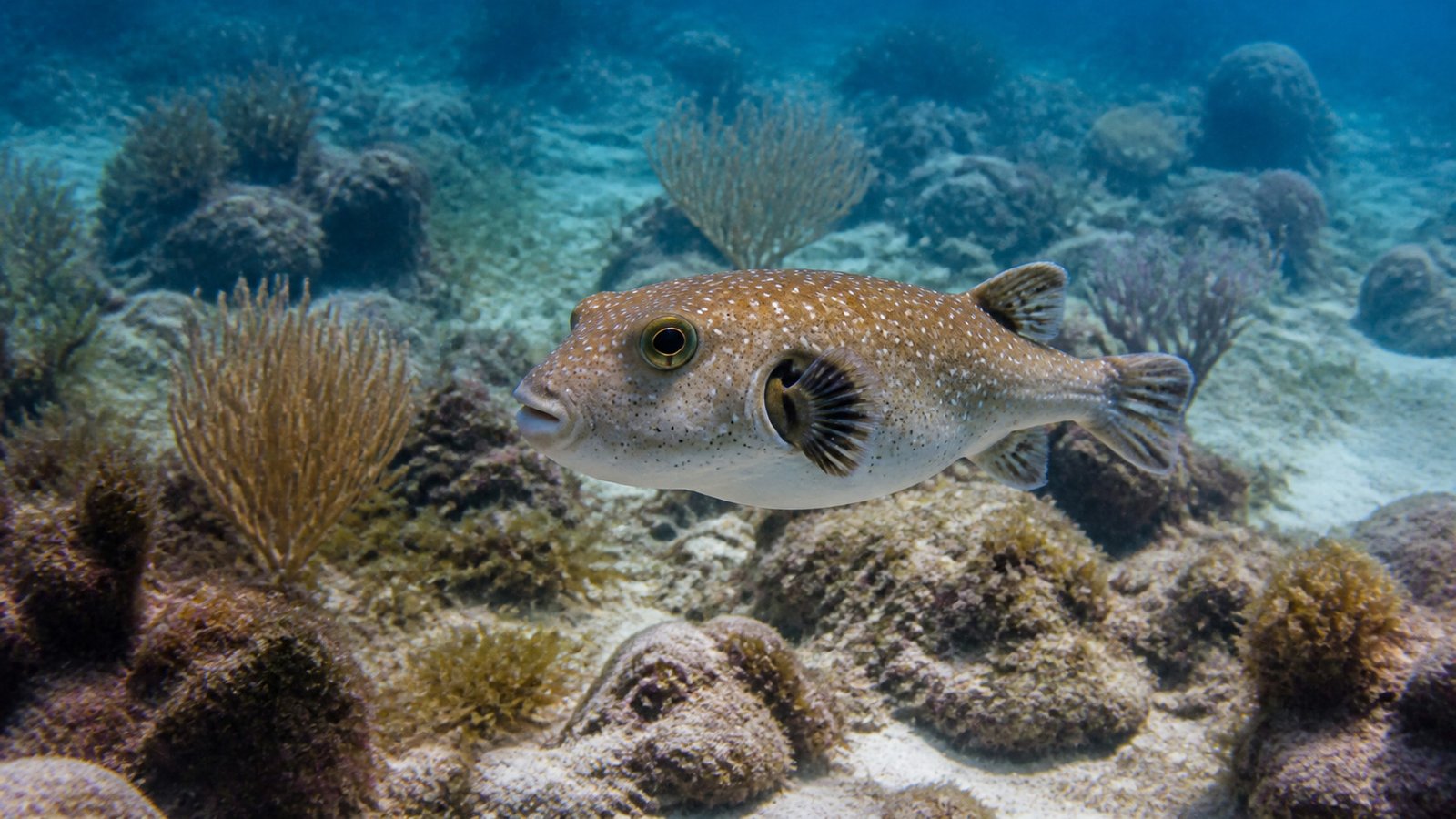
Can inflate into a spiky, inedible ball several times its normal size
When threatened, Pufferfish rapidly gulp huge amounts of water, or air, if out of water, into their highly elastic stomachs, swelling into a ball several times their normal size. Some species also have spines that stand on end when inflated, making them even harder for predators to eat. Biologists believe Pufferfish evolved this trait because their slow, somewhat clumsy swimming style leaves them vulnerable to predators.
Fact #3
Its toxin is made by bacteria, and survives being cooked
Pufferfish don’t produce tetrodotoxin (TTX) on their own, it’s made by bacteria that build up in their organs, particularly the liver, through what they eat. When humans consume the toxin, it blocks nerve signals, causing numbness that spreads from the mouth to the rest of the body, followed by paralysis and, in severe cases, respiratory failure and death. Because TTX is heat-stable, cooking a contaminated Pufferfish does not destroy the toxin.
Fact #2
The same poison that kills can also be a powerful painkiller
Tetrodotoxin (TTX) from Pufferfish has been tested in multiple clinical trials for cancer-related pain over more than a decade. Patients have reported pain relief lasting from a few weeks to months, with mild side effects — mostly nausea, dizziness, and numbness around the mouth. The relief comes from TTX blocking a nerve channel that carries pain signals.
Fact #1
A single fish carries enough toxin to kill 30 adults
Pufferfish hold the Guinness World Record for “most poisonous fish.” Its tetrodotoxin has an LD50 (lethal dose 50% — the amount that kills half of test subjects) of 232 micrograms per kilogram of body weight when ingested. For a 70 kg adult, a grain-of-rice-sized amount (around 16 mg) could be fatal. It’s about 1,250 times deadlier than cyanide, and a single fish carries enough toxin to kill around 30 adults, with no known antidote.

Conclusion

While the animals on this list are the most poisonous in the world, most pose little real threat if simply left alone. Their toxins exist for defence, not to target humans. Some of their toxins have even proven valuable in medical research, from painkillers to new anaesthetics. That said, in the wrong circumstances their toxins can easily be lethal. Look, don’t touch, and never eat what you can’t identify.

Get the Extremes

THE WORLD’S WILDEST FACTS. VERIFIED.

New rankings, remarkable animals and sourced facts, delivered occasionally.

No spam. Just verified extremes.

Follow What's The Most

Watch the countdowns. Read the evidence.

YouTube

TikTok

Instagram

Facebook

The World, Ranked.

Extreme claims.

Grounded in facts.

We start with a deceptively simple question and ends with a trail of credible sources