The Breakdown
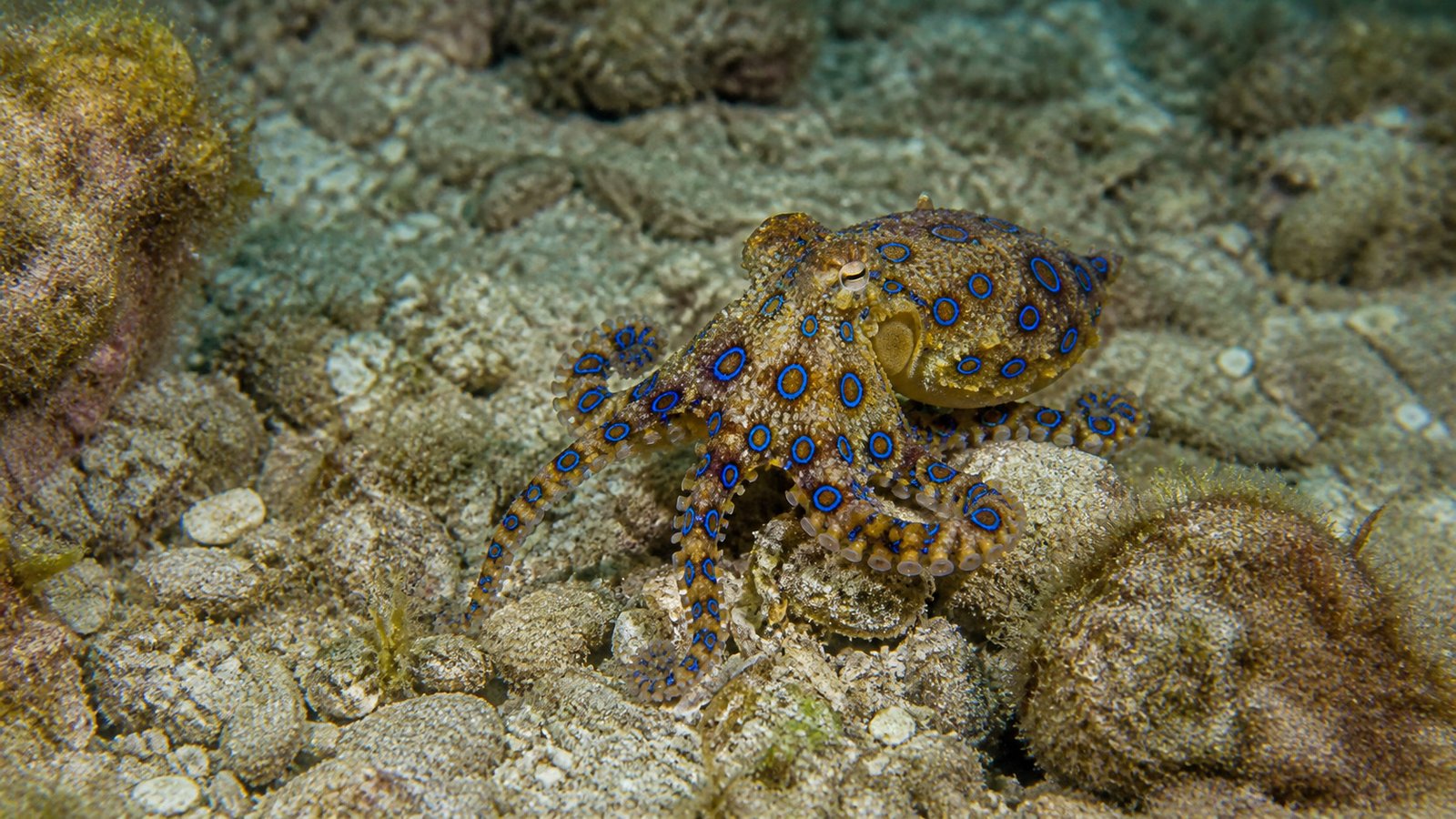
Blue-Ringed Octopus is the common name for a genus (Hapalochlaena) made up of several species: the greater, southern, and lesser blue-ringed octopus, plus the blue-lined octopus, with more undescribed species still being researched.
You might not even feel it bite you
The Blue-Ringed Octopus delivers a near-painless bite that injects the neurotoxin tetrodotoxin (TTX), blocking nerve signals in the body and causing muscle paralysis. It can disable the diaphragm, leading to death by respiratory failure — and there is no known antivenom for the toxin.
Its blue rings are a warning, not decoration
The Blue-Ringed Octopus grows no larger than 22 cm and weighs up to 100 g — some adults are the size of a golf ball. Usually brown, tan, or creamish-yellow, which helps them blend into the seabed. Their blue rings only appear when they feel threatened, produced by special cells called chromatophores that stretch open to reveal the hidden pigment, warning predators to keep away.
It would rather just eat crabs and be left alone
Despite carrying one of the most potent venoms in the ocean, the Blue-Ringed Octopus mostly just wants to chill, eat crabs, and live a quiet, solitary life. Only 3 deaths have been attributed to it since the 1960s.
A grain of salt’s worth of venom can kill an adult
The Blue-Ringed Octopus holds the Guinness World Record for “most venomous cephalopod.” Its tetrodotoxin has a subcutaneous LD50 (lethal dose 50% – the amount that kills half of test subjects) of just 12.5 micrograms per kg of body weight — for a 70 kg adult, a dose of only 0.87 mg (about the weight of a single grain of table salt) could be lethal.
Enough venom in one octopus to kill 26 people
Tetrodotoxin (TTX), found in the saliva of the blue-ringed octopus, is 1,000 times more powerful than cyanide. A single octopus carries enough venom to kill 26 humans within minutes. Symptoms include nausea, vision loss, loss of senses and motor skills, muscle numbness, and paralysis.
Profile
COMMON NAME: Blue-Ringed Octopus
SCIENTIFIC NAME: Hapalochlaena (Genus)
HABITAT: Tide pools and reefs, Indo-Pacific
COUNTRIES: Found across Indonesia, the Philippines, Japan, Papua New Guinea, the Solomon Islands, Vanuatu, Malaysia, Sri Lanka, and India
SIZE: 12 to 20 cm
WEIGHT: 25 to 100 g
DIET: Crabs and small crustaceans
LIFESPAN: 2 to 3 years