The Breakdown
Considered one of the most venomous animals in the ocean, it delivers stings that cause full-body paralysis. One Geography Cone Snail holds enough toxin to kill up to 60 people, with no effective antivenom available.
The toxin is so complex that no effective antivenom exists
The Geography Cone Snail delivers venom through a complex mixture of neurotoxic compounds called conotoxins, which block nerve and muscle signals through multiple pathways at once. Symptoms progress from numbness and weakness to full-body paralysis, respiratory failure, and cardiovascular collapse. The venom is so chemically complex that no effective antivenom exists.
A dose equal to two grains of salt is enough to be lethal
The Geography Cone Snail holds the Guinness World Record for “most venomous gastropod.” Studies estimate the venom’s LD50 (lethal dose 50% – the amount that kills half of test subjects) at 0.012 to 0.030 mg/kg, meaning for a 70 kg adult, a lethal dose could be as little as 0.84 to 2.1 mg, roughly the weight of one to two grains of table salt.
Its shell is highly sought after by collectors
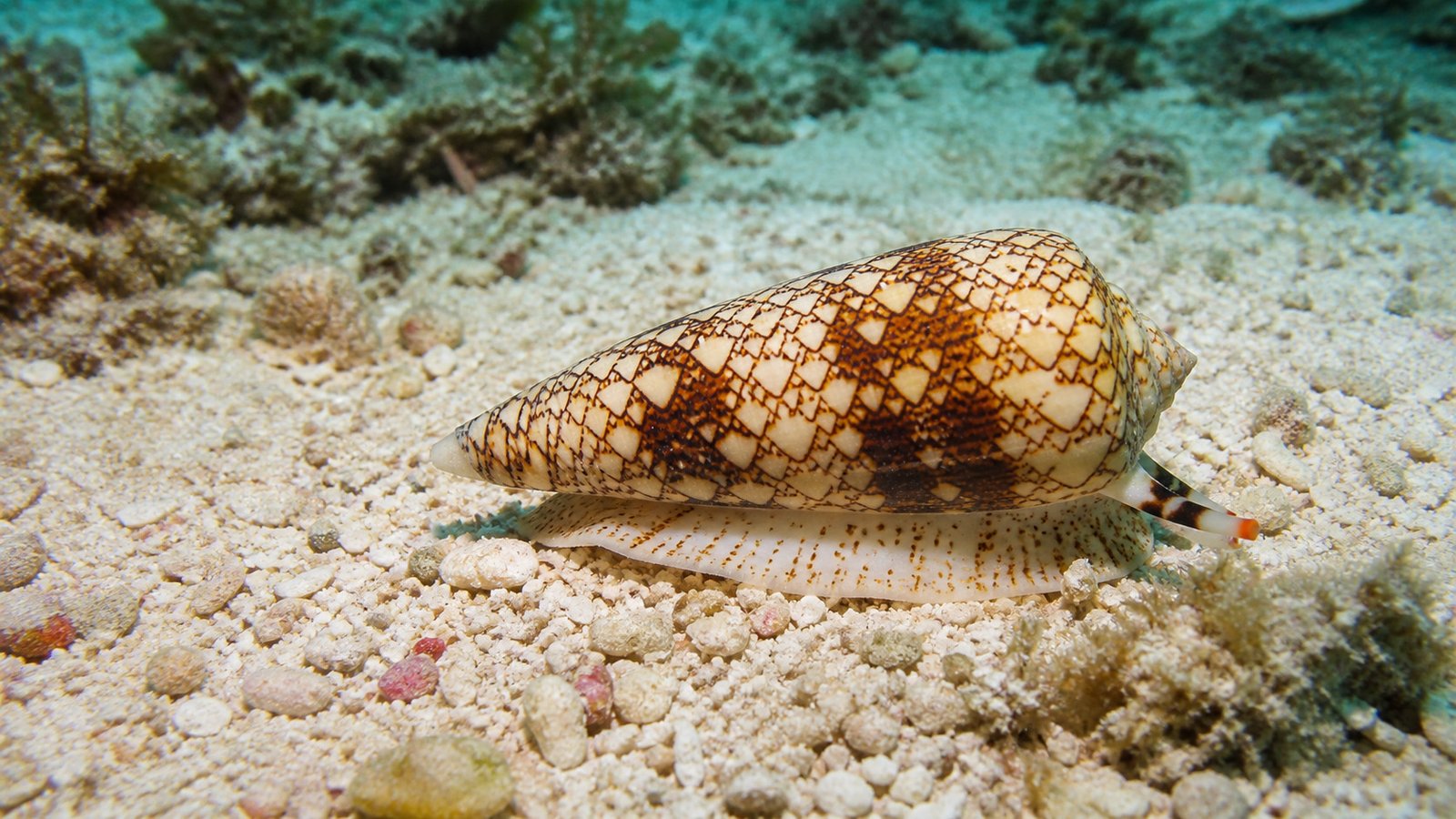
Growing to about 4 to 6 inches in length, the Geography Cone Snail has a beautifully patterned brown and white shell that’s highly sought after by shell collectors. Despite its venom’s potency, researchers have recorded only 36 deaths from the snail’s sting over the past 300 years.
A potential painkiller 10,000 times stronger than morphine, without the side effects
Certain proteins in the Geography Cone Snail’s venom target specific human pain receptors and have shown potential as painkillers. They can be up to 10,000 times more potent than morphine, but come without morphine’s addictive properties or side effects.
Enough toxin in one snail to kill up to 60 people
As one of the largest cone snail species, the Geography Cone Snail can produce about 50 mg of venom in its convoluted venom gland — enough, in theory, to kill up to 60 people.
Profile
COMMON NAME: Geography Cone Snail
SCIENTIFIC NAME: Conus geographus
HABITAT: Coral reefs and lagoon floors of shallow waters
COUNTRIES: Warm tropical and subtropical waters of the Indo-Pacific region, including the Indian Ocean, Southeast Asia, Australia, and the Pacific Islands
SIZE: 10 to 15 cm
WEIGHT: 13 to 62 g
DIET: Exclusively live fish (piscivore)
LIFESPAN: No recorded data, but most large gastropods average about 10 years