The Breakdown
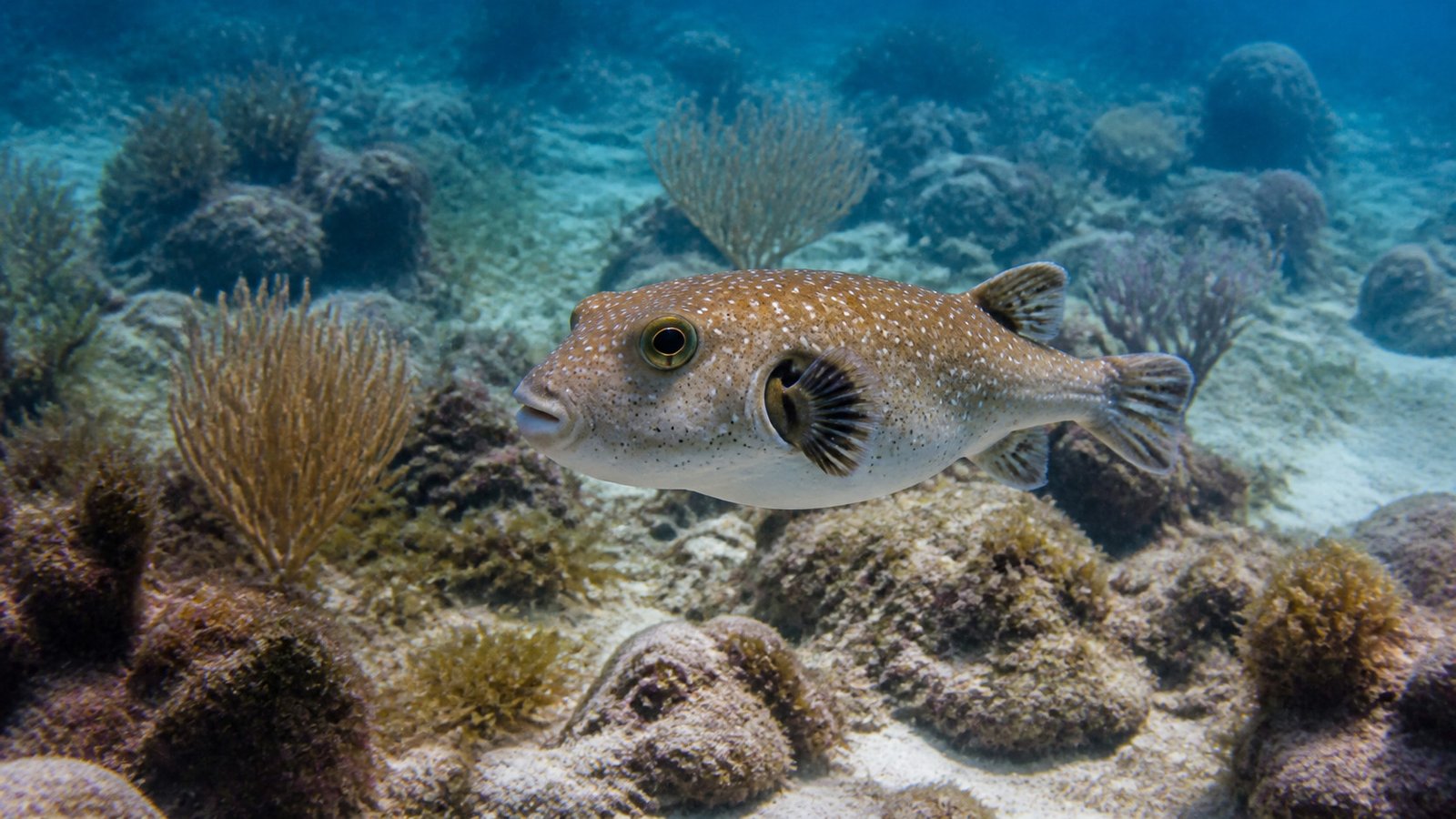
The Pufferfish belongs to the family Tetraodontidae, with nearly 200 species found in oceans and some rivers worldwide. Most also carry tetrodotoxin, a poison built up from bacteria in their diet, as a final defence if a predator still tries to eat them.
Pufferfish are surprisingly closely related to giant ocean sunfish
Pufferfish belong to the order Tetraodontiformes, a group of 447 species across ten families that also includes the bumphead ocean sunfish, the largest bony fish in the world at up to 2,721 kg (6000 lbs). Despite the shared ancestry, Pufferfish are tiny by comparison, and their own family, Tetraodontidae, contains around 196 species.
Can inflate into a spiky, inedible ball several times its normal size
When threatened, Pufferfish rapidly gulp huge amounts of water, or air, if out of water, into their highly elastic stomachs, swelling into a ball several times their normal size. Some species also have spines that stand on end when inflated, making them even harder for predators to eat. Biologists believe Pufferfish evolved this trait because their slow, somewhat clumsy swimming style leaves them vulnerable to predators.
Its toxin is made by bacteria, and survives being cooked
Pufferfish don’t produce tetrodotoxin (TTX) on their own, it’s made by bacteria that build up in their organs, particularly the liver, through what they eat. When humans consume the toxin, it blocks nerve signals, causing numbness that spreads from the mouth to the rest of the body, followed by paralysis and, in severe cases, respiratory failure and death. Because TTX is heat-stable, cooking a contaminated Pufferfish does not destroy the toxin.
The same poison that kills can also be a powerful painkiller
Tetrodotoxin (TTX) from Pufferfish has been tested in multiple clinical trials for cancer-related pain over more than a decade. Patients have reported pain relief lasting from a few weeks to months, with mild side effects — mostly nausea, dizziness, and numbness around the mouth. The relief comes from TTX blocking a nerve channel that carries pain signals.
A single fish carries enough toxin to kill 30 adults
Pufferfish hold the Guinness World Record for “most poisonous fish.” Its tetrodotoxin has an LD50 (lethal dose 50% — the amount that kills half of test subjects) of 232 micrograms per kilogram of body weight when ingested. For a 70 kg adult, a grain-of-rice-sized amount (around 16 mg) could be fatal. It’s about 1,250 times deadlier than cyanide, and a single fish carries enough toxin to kill around 30 adults, with no known antidote.
Profile
COMMON NAME: Pufferfish
SCIENTIFIC NAME: Tetraodontidae
HABITAT: Mostly in warm and temperate marine waters; some species live in brackish or freshwater rivers
COUNTRIES: Found worldwide in tropical and subtropical oceans, with freshwater species in Southeast Asia, South America, and Africa
SIZE: 2.5 cm to around 120 cm
WEIGHT: Less than 1 g to over 10 kg
DIET: Mostly invertebrates and algae. Large species will crack open and eat clams, mussels, and shellfish with their hard beaks
LIFESPAN: 3 to 20 years