The Breakdown
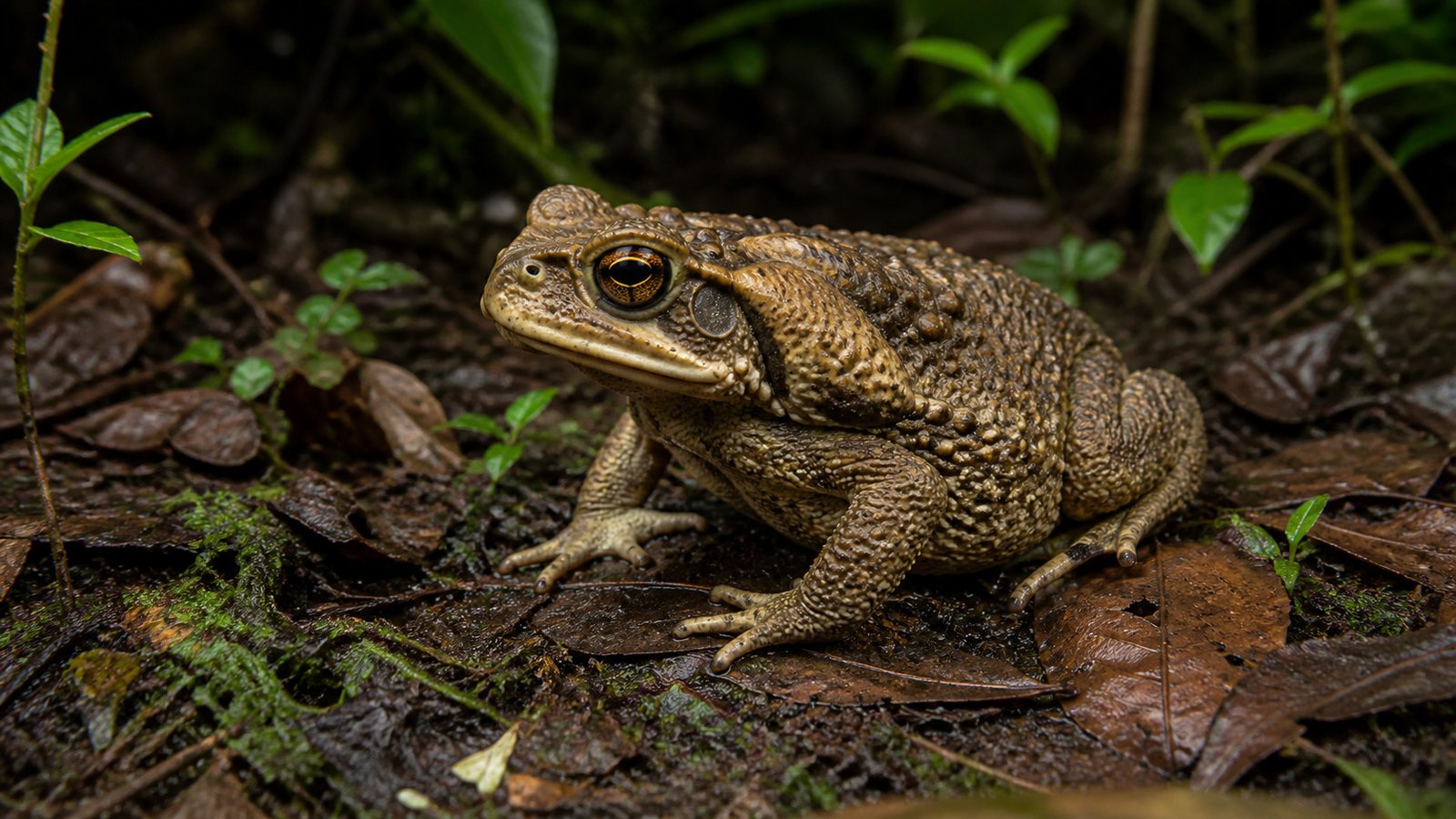
The Cane Toad is a large, toxic amphibian native to South and Central America. When threatened, it secretes a milky toxin called bufotoxin that affects the heart and central nervous system. The same toxin is present during its egg and tadpole stages.
Introduced to save Australia's sugar crops from pests, it became a bigger one
In 1935, Cane Toads were released in Queensland, Australia, to control native cane beetles that were damaging sugarcane crops. Instead of controlling the beetles, the toads became a pest that killed many native predators, and being indiscriminate eaters, out-competed native species for food. Since then, they have spread into other parts of Australia, threatening even more native species.
The world's largest toad also produces more eggs than any other amphibian
The Cane Toad holds the Guinness World Record for “largest toad.” Typically weighing 500 to 800 g and measuring 15 to 25 cm long, the largest ever recorded was one named Prinsen (“The Prince”), which weighed 2.65 kg and measured 38 cm. It is also the most fecund amphibian, laying up to 35,000 eggs at once, and capable of doing so twice a year.
Even its eggs and tadpoles carry the same toxin
Besides being poisonous during their adult stage, Cane Toads’ eggs and tadpoles are poisonous too, carrying the same toxin, bufotoxin. It contains cardioactive steroids that affect the heart and central nervous system. For humans, the toxin may be absorbed through the eyes, nose, or mouth, causing irritation.
Its introduction has driven sharp declines in native Australian predators
If ingested, the toxin from Cane Toads causes rapid heartbeat, excessive salivation, convulsions, and paralysis, and can be fatal to many native animals. Since their introduction, they have spread across Australia, causing an accelerated decline in populations of native predators like goannas, northern quolls, and snakes — largely a result of these animals attempting to eat the toxic toads.
Enough toxin to kill an average-sized dog in just 15 minutes
Vets at Animal Emergency Service treat thousands of cases of dogs being poisoned by Cane Toads every year. It happens when dogs lick or bite the toads, and the poison targets their heart, gastrointestinal tract, and nervous system. It is believed that an adult Cane Toad has enough toxin to kill an average-sized dog in 15 minutes. Rapid treatment is critical for survival.
Profile
COMMON NAME: Cane Toad
SCIENTIFIC NAME: Rhinella marina
HABITAT: Grassland, woodland, farmland, and suburban areas; needs moisture, so also found near swamps, dunes, and rainforest edges
COUNTRIES: Native to South and Central America. Introduced to Australia, the Philippines, Papua New Guinea, Guam, Hawaii, Florida, and several Caribbean islands
SIZE: Typically 15 cm to 25 cm
WEIGHT: Usually 500 g to 1.5 kg
DIET: Insects, small mammals, birds, reptiles, other amphibians, vegetation, and even human garbage and pet food
LIFESPAN: 5 to 10 years in the wild